
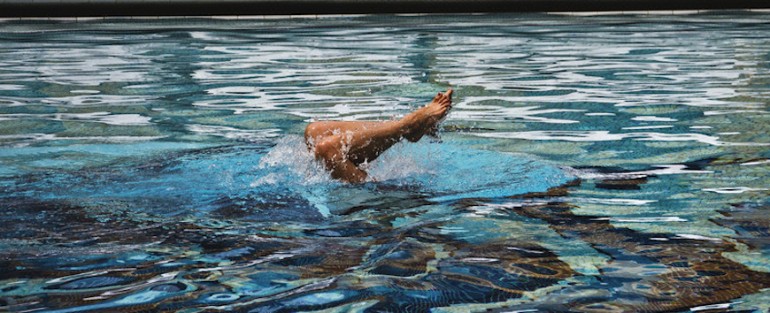
I tried my best —I really did— to maintain an air of well-traveled sophistication upon entering the Phoenician’s pristine marble lobby. But by the time I found myself gazing out on the desert panorama, fringed by impossibly tall king palms and serenaded by baroque classical music struck up on cue as I entered the room, my head was swimming and I couldn’t wipe the giddy smile from my face. No doubt it’s this champagne-buzz bliss that keeps everyone from Saudi royalty to professional athletes coming back, again and again, to the Phoenician’s secluded, sumptuous world in the shadow of Camelback Mountain.
It’s not only the obvious amenities—gorgeously plush linens, the sheen of ever-changing sunlight reflected through the fountains within and without the foyer. It’s also the unflaggingly attentive staff, and the little details they provide—from folding floor-strewn clothes and leaving behind chocolates, to the enthusiasm with which they present high tea in the lobby parlor. While the resort offers a panoply of activities (golf, yoga, spa treatments, a water park-style pool), my favorite by far was sinking into a divan beside the bonfire on the Thirsty Camel patio, overlooking the twinkling desert nightscape and realizing what it feels like to be royalty.
 From US329+ per night
 – Over-the-top elegance with attentive staff that leaves no detail overlooked.
  – Popular venue for large groups and events.


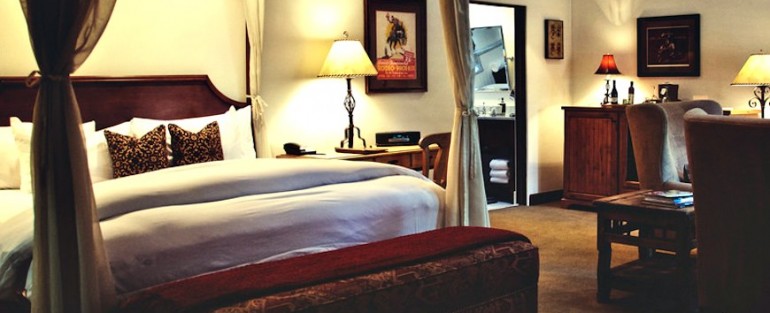
For a diminutive boutique hotel, the Hermosa Inn offers loads of features to love: its quiet seclusion cradled against the side of Camelback Mountain, the unexpected riot of color offered by its desert foliage, its quirky history as the former estate of cowboy artist Lon Megargee.
Visitors fall quickly in love with not only the period charm of its hacienda-style architecture—painted tiles embedded in mauve adobe walls, traditional beehive fireplaces, heavy roofbeams that throw a criss-cross pattern down from the skylight— but also with the finesse of the Hermosa Inn’s hospitality— gauze-hung iron canopy spread with meltingly soft sheets, a capacious antique bathtub stocked with lemon-balm soap, homemade chocolates left unobtrusively on the hearth, the cocktail hour illuminated by a string of cafe lights and serenaded by 1950s cowboy standards.
But the aspect that charmed me most was the birds who, like the inn’s many repeat guests, have made the 34-room property their personal sanctuary. I enjoyed a visit from a pair of quail while taking morning coffee on my private patio, drowsed in a hammock attended by hummingbirds, and watched a barred owl swoop across the pink sky as the moon rose. Anywhere else, subtleties like these might have escaped my notice, but the Hermosa Inn provides the perfect environment for attuning yourself to nature’s quieter beauties.
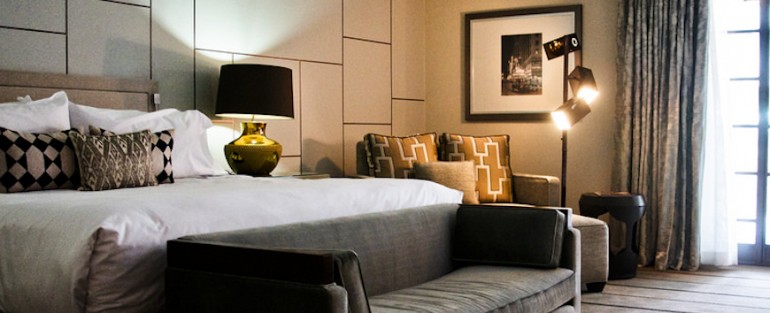
I was doubtful whether even the most de luxe accommodations could overcome my perennial distaste for the desert. But the Arizona Biltmore showed me that I was about to see the desert in a whole new light, guiding me off Phoenix’s main drag down a winding lane of jacaranda trees to the towering main entrance, its imperious angles softened by the rosy backdrop of the sunset.
Designed by a student of Frank Lloyd Wright, the Biltmore is an icon of the Art Deco movement. Its historic pedigree is showcased both inside and out, with sumptuous amenities emphasized by venerable history. In the lobby bar, under a gold-leaf ceiling second in size only to the Taj Mahal, I tasted my first Tequila Sunrise cocktail at the very bar where it was invented. Swimming laps in Catalina Pool the following morning, I admit to feeling just a little more elegant knowing that it was Marilyn Monroe’s favorite place to swim.
Arizona’s perpetual warmth and sunshine make the Biltmore a seasonless favorite among snowbirds and “stay-cationers,” who keep the 39-acre property lively all year long. Much as I enjoyed the people-watching, I was grateful for the sanctuary provided by Ocatilla, a secluded wing where the Biltmore curates its luxurious appointments to individual needs.
…unless, of course, you get tipped off (as I did) with the password to the Mystery Room, the Prohibition-era speakeasy whose secret doors have been newly reopened to offer jazz-hot music and libations to an exclusive crowd on Sunday nights.
Between its period-perfect luxury and its appropriation of natural beauty, the Arizona Biltmore will teach anyone to adore the desert. Personally, I can’t wait to return.

Nothing washes away the weary stain of travel like a well-put-together rez-de-chausée. From the moment I walk into the Swissôtel’s lobby (designed in homage to the building’s original architect, Chicago legend Harry Weese), I feel like I’m on holiday.
Giving my name at one of the sleek concierge consoles, I linger under the whimsical raindrop-inspired light sculptures. Bubbly Europop floats from the adjacent Amuse bar, where stylish travelers sip even more stylish cocktails.
A bouquet of narcissus embellishes the suite’s clean white lines, which are warmed by worn leather accents. The linens are the kind that brides register for with fingers crossed. And what better way to awaken than to sunlight streaming over a cobalt vista of Lake Michigan, framed by highrises on either side like a parted curtain.
I wondered, more than once, how so modern a hotel nevertheless conveys such grounded warmth. A visit to the hotel restaurant—1950s throwback the Palm—settled that question. It’s an old-school, unassuming service ethic that makes the Swissôtel more than a mere flash of stylish modernity.